
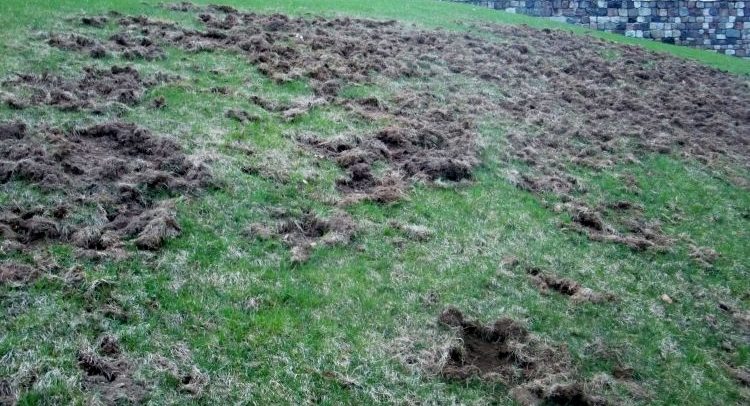
Many homeowners in The Ridge have experienced significant lawn damage this winter due to the European chafer beetle. The real culprit is not the adult beetle, but its larval stage—white, C-shaped grubs that feed on grass roots from late summer through spring. As the grubs feed underground, they weaken and kill the turf, often leading to large brown patches. To make matters worse, raccoons and crows frequently dig up lawns in search of these grubs, compounding the damage.
What’s happening under your lawn
European chafer beetles lay their eggs in dry turf during the summer. By August, grubs begin feeding and continue into the fall. During warmer periods in winter, they may resume feeding briefly before going dormant again. In early spring—right now—they return to the surface and begin feeding aggressively on grass roots until late May. This is when lawns may appear slow to green up or fail to recover altogether.
How to restore your lawn this spring
Late March through April is the ideal time to begin repairing grub-damaged areas:
- Clear Debris: Rake away dead grass, leaves, and thatch to expose soil.
- Reseed Bare Spots: Use a grass seed mix suitable for our climate and apply generously to any bare or thinned areas.
- Add Soil or Compost: Lightly topdress seeded areas to help retain moisture and improve germination.
- Water Consistently: Keep the soil consistently moist until seedlings are well established.
- Fertilize Carefully: Apply a starter fertilizer to support new growth, if desired.
Treatment and prevention
If your lawn is showing signs of active damage—such as torn-up grass from raccoons or brown patches that fail to green up—short-term action can still help. Insecticides containing carbaryl or trichlorfon can be applied in March or April to reduce the grub population before they finish feeding for the season. These curative treatments are most effective on actively feeding grubs and should be watered in immediately after application. Always follow label instructions and take appropriate safety precautions.
To avoid future infestations, plan ahead for summer. European chafer beetles begin laying eggs in July, and preventive treatments are most effective when applied before grubs hatch. A healthy, well-watered lawn in June is less attractive to egg-laying beetles. For long-term protection:
- Apply a preventive grub treatment between mid-June and mid-July using products that contain imidacloprid, chlorantraniliprole, or similar ingredients.
- Water your lawn deeply after applying treatments to ensure they reach the root zone.
- Follow all safety guidelines, including proper storage and use of protective gear.
By combining early spring care with preventive summer treatment, you can help your lawn recover this season and avoid repeated damage in future years.

 The Ridge HOA